Economic Inputs
- Inflation expectations
- Employment trends
- GDP growth
- Treasury markets
- Energy prices
- Market volatility
Virtual Economist combines machine learning, public economic indicators, market expectations, and aggregated Optimal Blue mortgage market data to forecast mortgage rates and lock volume. Explore how changing economic conditions could influence market outcomes, understand the drivers behind the forecast, and evaluate alternative scenarios to support planning discussions.
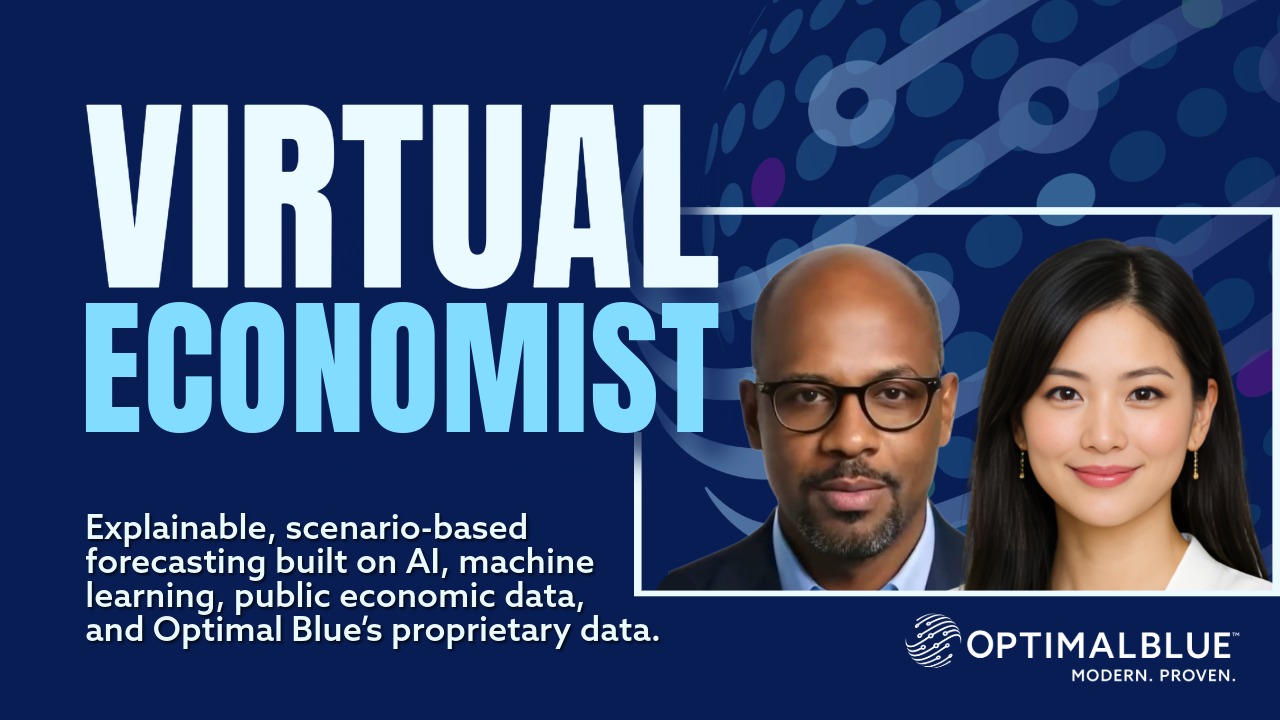
Markets change.
Assumptions change.
Forecasts should too.
Market forecasts are everywhere. Confidence is not. Finance teams, capital markets leaders, and executives are often asked to make planning decisions using static projections, disconnected economic commentary, and assumptions that can change quickly. Virtual Economist helps bring those signals together in an interactive forecasting experience designed to support more informed planning discussions.
Virtual Economist helps lenders move beyond static projections by providing forecasts that can be explored, explained, and stress-tested as economic conditions evolve. Instead of focusing solely on what may happen, teams can evaluate how changing assumptions may affect rates, volume, and market activity.
Virtual Economist combines publicly available economic data with aggregated mortgage market activity observed across the Optimal Blue platform. This combination helps connect broader economic conditions to real mortgage market behavior, creating forecasts informed by both macroeconomic trends and mortgage market activity.

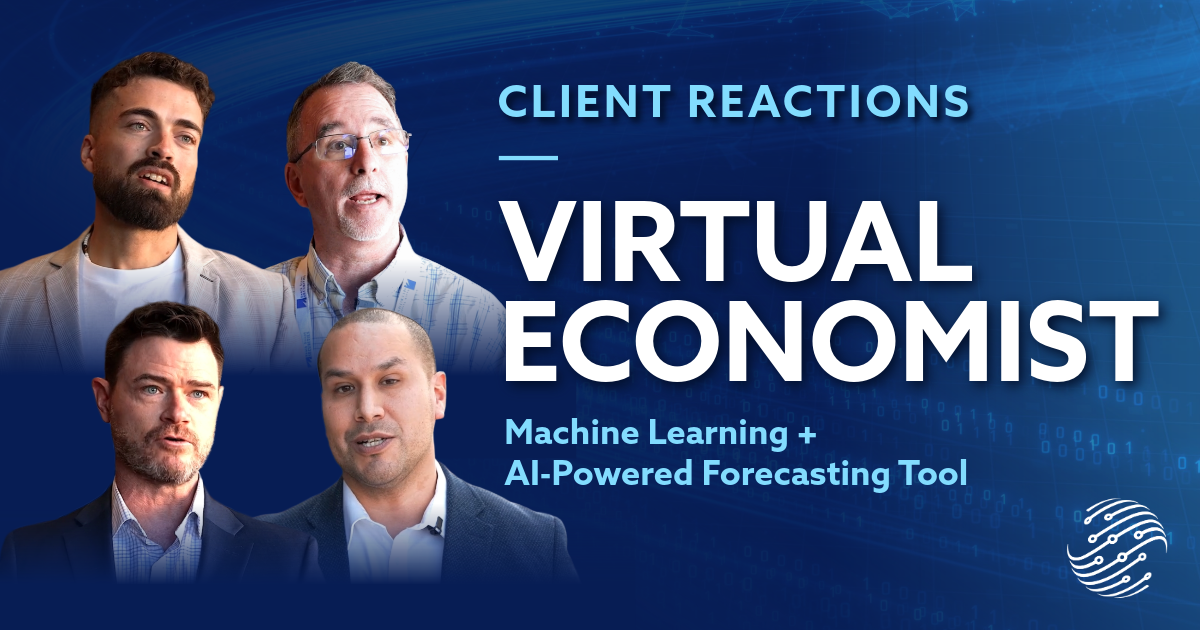
At Summit 2026, clients got an early look at Virtual Economist. Hear their first impressions of the interactive forecasting experience and its potential to support mortgage-market planning.
Every forecast begins with a baseline outlook built from documented economic assumptions, market expectations, public economic forecasts, and mortgage market data. From there, Virtual Economist allows users to explore how changes in inflation, monetary policy, energy prices, economic growth, or other market conditions could influence mortgage rates and lock volume.
Traditional forecasts may provide an outlook without making every underlying driver easy to explore. Virtual Economist helps explain how that answer was reached.
Rather than relying on a single model, Virtual Economist forecasts key market components independently and combines them into a mortgage rate outlook aligned with OBMMI™ (Optimal Blue Mortgage Market Index), the industry benchmark representing the average locked mortgage rate across the Optimal Blue platform. This structure allows forecasts to be broken down into drivers, explained clearly, and questioned as conditions change.

Establishes the macro foundation of mortgage rates by modeling how growth expectations, inflation signals, volatility, and policy dynamics influence Treasury movements over time.

Models how mortgage-backed securities pricing diverges from Treasury yields by accounting for market risk, investor demand, and volatility conditions.

Shows how secondary market execution translates into the consumer mortgage rate by accounting for margin behavior, market volatility, and proprietary Optimal Blue pricing signals.

Translates the rate environment into expected market activity by isolating interest rate impacts and seasonal origination patterns. Lock volume is expressed as a year-over-year percentage change to support planning.
Dive deeper into the market dynamics, forecasting concepts, and analytical framework that help make Virtual Economist a more informed way to evaluate potential rate and lock volume scenarios.

Virtual Economist combines predictive machine learning with a conversational experience designed to make forecasting more accessible and easier to evaluate. Forecasts are intended to be explored, questioned, and revisited as market assumptions change.
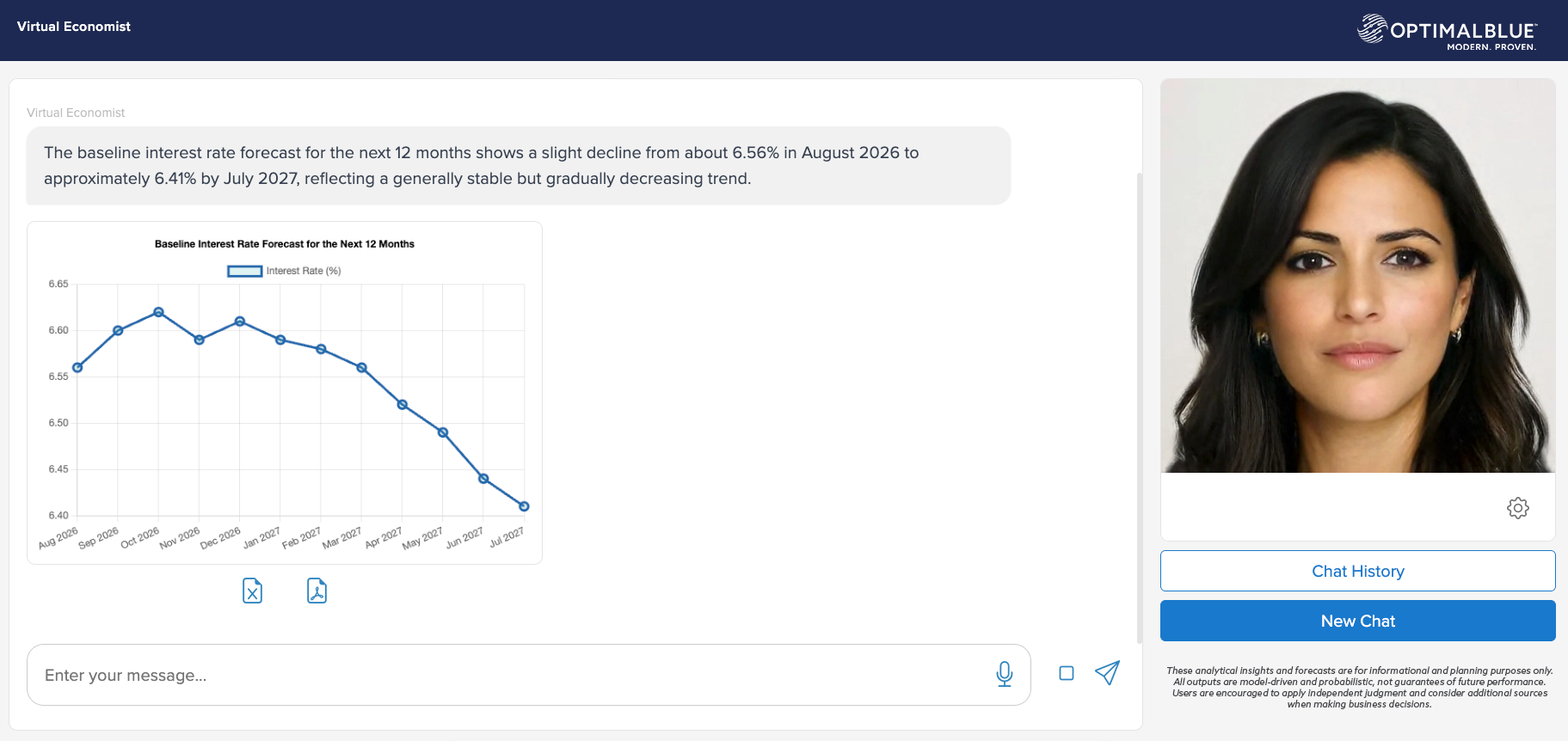
Built into the Optimal Blue platform, Virtual Economist supports natural interaction through voice or text prompts. Visual outputs and export capabilities help users evaluate potential outcomes and incorporate forecasting insights into planning discussions.

Choose a Virtual Economist avatar for a conversational forecasting experience.

Use voice or text prompts to ask questions about mortgage rates, lock volume, economic conditions, or market scenarios.

Review forecast outputs, trends, visualizations, and supporting context.

See which market factors are contributing to forecast movements and how assumptions influence outcomes.

Export insights to Excel or PDF for planning discussions, budgeting exercises, scenario reviews, and executive presentations.
Virtual Economist supports voice and text-based engagement through an AI avatar, allowing users to explore forecasts, scenario analysis, and mortgage market outlooks in a more natural way.
Ask scenario questions naturally and explore forecast outcomes through conversation.
Enter questions directly to compare outcomes and evaluate planning scenarios.
Choose an avatar economist preference for a personalized experience.









What happens to mortgage rates and lock volume if inflation remains elevated longer than expected?
Support pricing conversations and margin discussions with a structured view of what is driving rate movement.
Evaluate potential market outcomes and planning scenarios using forecast-driven insights and structured scenario analysis.
Support budgeting, forecasting, capacity planning, and operational readiness efforts with updated market outlooks.
Increase confidence in the forecast with explainable components, drivers, and supporting context that clarify the “why” behind the numbers.
Virtual Economist helps lenders evaluate possible outcomes, understand the forces driving market change, and incorporate data-driven forecasting into planning discussions across the organization. Forecasts and scenario analyses are designed to inform planning, not replace experience, judgment, or existing decision-making processes.
Connect with an Optimal Blue expert for a personalized walkthrough.